




One of the first questions people ask when starting a partner visa application is simple — how long is this going to take?
The honest answer is that Australian partner visa processing time is one of the longest of any visa category in Australia. It is not something to take lightly. Planning your life around a realistic timeline makes the whole experience much easier to manage.
This blog covers everything you need to know about processing times — why they are long, what affects them, what happens at each stage, and what you can do to avoid unnecessary delays.
Why Does a Partner Visa Take So Long?
Partner visas are assessed manually by case officers at the Department of Home Affairs. Unlike some visa categories that are largely automated, every partner visa application involves a real person reviewing your relationship evidence, checking your health results, and confirming your character clearances.
The volume of partner visa applications lodged each year is significant. Processing resources are stretched. And because the Department is looking for genuine relationships — not just completed forms — each case takes time to assess properly.
This is not the Department being difficult. It reflects how seriously Australia takes the integrity of its partner visa program.
The Two-Stage Visa System
Before talking about timeframes, it helps to understand how the partner visa actually works.
You do not get a permanent visa straight away. The partner visa is a two-stage process.
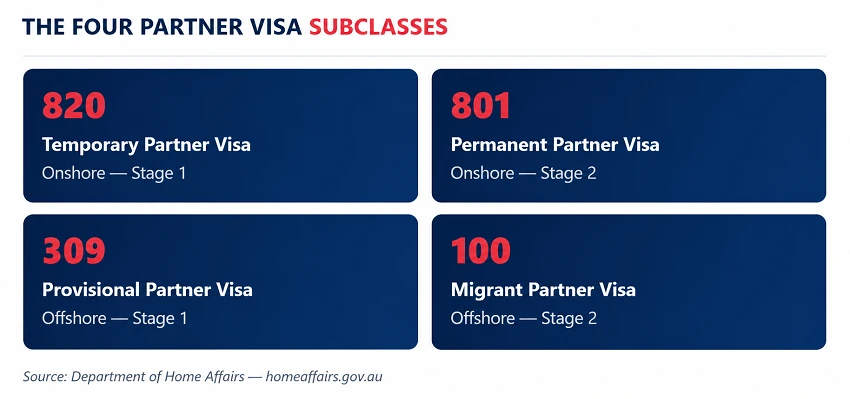
When you apply, you apply for two visas at once — a temporary visa and a permanent visa. You pay one fee and lodge one application. But the permanent visa is only granted after further assessment, usually around two years after your initial application.
If you apply from inside Australia:
- Stage 1: Subclass 820 — Temporary Partner Visa
- Stage 2: Subclass 801 — Permanent Partner Visa
If you apply from outside Australia:
- Stage 1: Subclass 309 — Provisional Partner Visa
- Stage 2: Subclass 100 — Migrant Partner Visa
Both pathways follow the same two-stage timeline. The difference is simply where you are when you apply.
Australian Partner Visa Processing Time — Stage 1
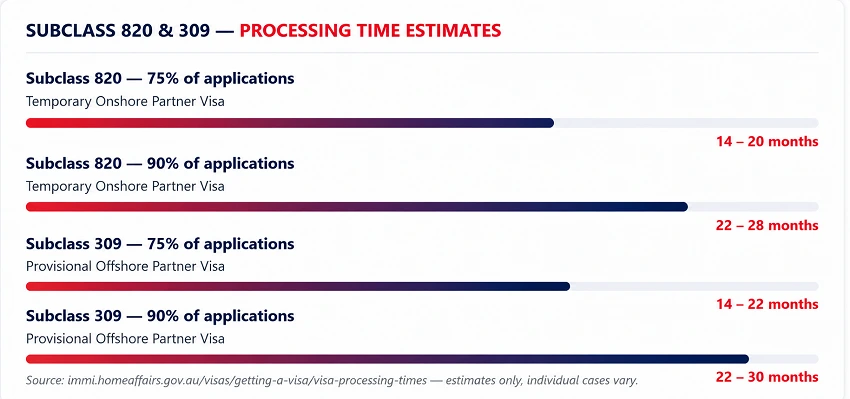
Subclass 820 (Onshore — Applied from Inside Australia)
The subclass 820 is the temporary visa granted to people who apply while already in Australia.Based on Department of Home Affairs processing data:
Australian Partner Visa Processing Time — Stage 2
After your temporary visa is granted, the clock continues.
The permanent visa is not assessed immediately after the temporary visa. The Department waits until approximately two years have passed from the date your original application was lodged — not from when the temporary visa was granted.
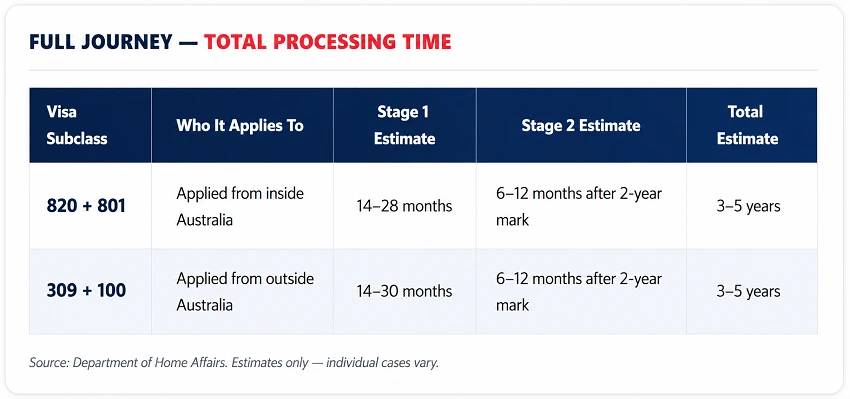
This is an important distinction. If your temporary visa took 18 months to process, you may only wait a further 6 months before the permanent visa assessment begins. After the two-year mark, the permanent visa review typically takes a further 6 to 12 months.
What Happens While You Wait?
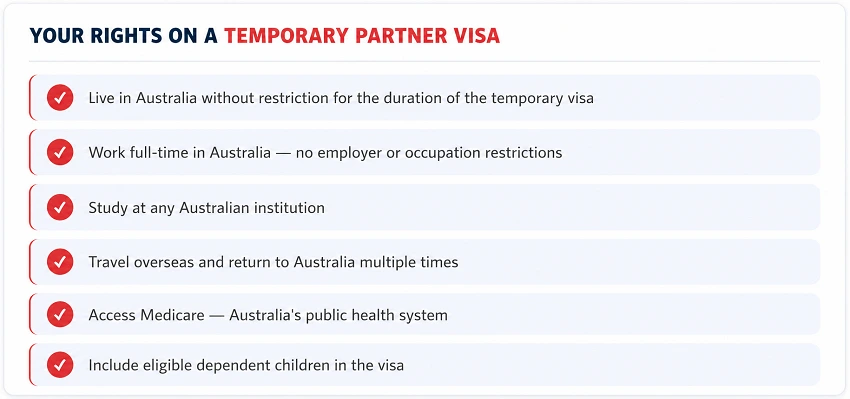
The waiting period is not dead time. Once your temporary partner visa is granted, you have full working rights, access to Medicare, and the ability to travel.
What Affects Partner Visa Processing Time?
Not all applications take the same amount of time. Several factors push processing times out.
Incomplete Applications
This is the biggest cause of delays. If your application is missing documents — police clearances, health results, relationship evidence — the Department sends a formal request for more information.
Every request pauses processing. You have a set time to respond. If you respond slowly or incompletely, the delay compounds.
An application lodged with everything in order from the start avoids this entirely.
Health Examination Delays
After lodging, you need to book a health examination with a Department-approved panel doctor. If you delay this booking, or if results take time to come back, the whole application is held.
Book your health examination as soon as possible after lodging.
Police Clearance Delays
Police clearances from some countries take weeks or months to arrive. You need clearances from every country where you have lived for 12 months or more in the last 10 years.
Apply for these before you lodge, or immediately after. Do not wait until the Department asks for them.
Weak Relationship Evidence
Applications with thin or vague relationship evidence require more careful scrutiny from case officers. Sometimes the Department sends requests for additional evidence. This adds months.
Strong, organised, detailed relationship evidence from the start reduces this risk significantly.
Previous Visa Issues
Previous visa refusals, overstays, or character concerns in your history can trigger a more detailed assessment. These cases naturally take longer.
Volume of Applications
The Department manages a large caseload. During periods of high application volumes, processing times increase across the board. This is outside your control.
Tip: The single most effective thing you can do to reduce processing time is lodge a complete, well-organised, fully evidenced application from day one. Every missing document adds time to an already lengthy process.
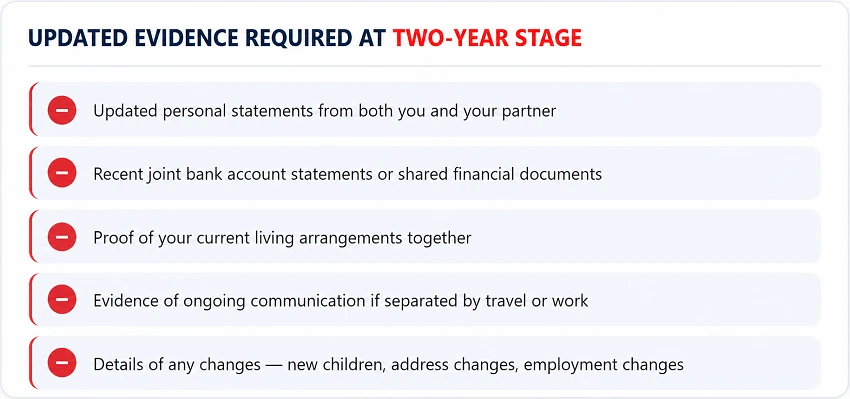
The Two-Year Wait: What the Department Looks For
When the permanent visa stage is reached, the Department reassesses your relationship. This is not just a formality.
They want to see that your relationship is still genuine and ongoing. You may be asked to provide updated evidence including:
What If the Relationship Ends Before the Permanent Visa?
If your relationship ends before the permanent visa is granted, you must notify the Department of Home Affairs.
In most cases, the permanent visa will not be granted if the relationship has ended.
However, there is an important exception. If you experienced family violence committed by your sponsor during the relationship, Australian immigration law has provisions that may allow your permanent visa application to continue even though the relationship has ended.
This is a specific legal protection. If it applies to you, seek professional advice from a registered migration agent immediately.
Important: If you are in this situation, seek professional advice from a registered migration agent immediately. These are time-sensitive matters with serious consequences.
Can Processing Be Sped Up?
There is no standard priority processing option for partner visas.
In exceptional circumstances — a serious medical condition, a humanitarian situation, or other urgent personal circumstances — you can contact the Department of Home Affairs to request urgent consideration of your application. This is assessed case by case. There is no guarantee of expedited processing.
The most effective way to reduce your processing time is straightforward: lodge a complete, well-evidenced, properly organised application from the start. Every document in place. Every clearance obtained. Every piece of evidence clear and relevant.
Where to Check Current Partner Visa Processing Times
Processing times change. Always check the most current estimates directly from the Department before lodging and periodically during your application.
Official source: https://immi.homeaffairs.gov.au/visas/getting-a-visa/visa-processing-times
Bridging Visas and Travel While You Wait
If you apply for an onshore partner visa while your current visa is still valid, you will be granted a Bridging Visa A when your current visa expires. This allows you to stay in Australia during processing. However, it does not allow overseas travel and return.
If you need to travel overseas while your partner visa is being processed, you must apply for a Bridging Visa B before leaving Australia. Leaving without a Bridging Visa B can cause your Bridging Visa A to cease, creating serious problems for your application.
Important: If you are planning any overseas travel during your application, speak with a migration agent before you book your flights. Missing this step is a common and costly mistake.
Frequently Asked Questions
How long does it take to get a partner visa in Australia?
The temporary visa stage takes approximately 14 to 28 months depending on your subclass and how complete your application is. The permanent visa follows after the two-year mark from lodgement. Total time from application to permanent residency is typically 3 to 5 years.
Does processing time start from when I lodge or when the temporary visa is granted?
Processing time for the permanent visa stage is measured from the date your original application was lodged — not from when the temporary visa was granted. This is an important distinction that affects your timeline planning.
Will I get updates from the Department during processing?
The Department does not provide regular progress updates. You can check your application status through your ImmiAccount. The Department will contact you if they need more information or when a decision is made.
What happens if my visa expires while the application is being processed?
If you are onshore and applied before your visa expired, you should automatically receive a Bridging Visa A, which allows you to stay in Australia while processing continues. Check your ImmiAccount to confirm.
Is offshore processing faster than onshore?
Processing times for onshore (820) and offshore (309) applications are broadly similar. The main difference is where you wait — inside Australia on the temporary 820, or outside until the 309 is granted.
Can I work in Australia while waiting for my partner visa?
Yes. Once the temporary partner visa (820 or 309) is granted, you can work full-time in Australia with no restrictions. Before the temporary visa is granted, your right to work depends on your current visa.
Conclusion
Australian partner visa processing time is long. There is no shortcut around that reality. But understanding the timeline clearly — knowing what to expect at each stage, what can slow things down, and what you can control — makes the process far less stressful.
The single most effective thing you can do is lodge a complete, well-prepared application from day one. Every missing document, every piece of thin evidence, and every avoidable delay adds time to an already lengthy process.
If you are planning a partner visa application or are already in the process and want to make sure everything is on track, speaking with a qualified migration agent Australia is a practical step worth taking.
Asia Pacific Group's MARA-registered migration agents can review your application, identify potential issues, and make sure your evidence gives your case the best possible foundation.
Book a Free Assessment | Speak With a Migration Consultant | Get Clarity on Your Timeline
*Disclaimer: Processing times in this article are estimates based on Department of Home Affairs data and are subject to change. Always verify current processing times at immi.homeaffairs.gov.au. This article is for general information only and does not constitute migration advice. Speak with a registered migration agent for advice specific to your circumstances.*


