



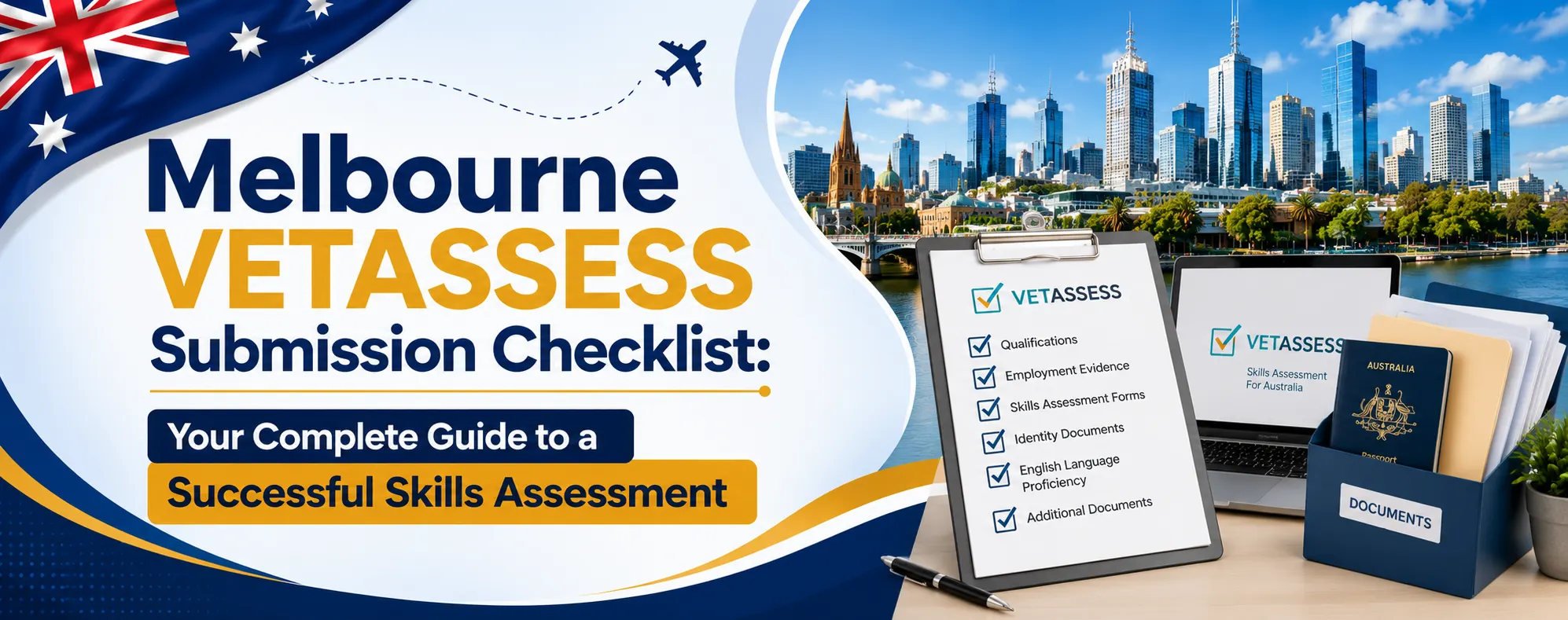
When moving to Australia through a skilled visa pathway, obtaining a positive skills assessment sets you on the most critical path. VETASSESS is the assessing authority for many professional and trade occupations and checks if your qualifications and employment experience are in line with Australian standards.
Missing documents, not enough employment evidence or incorrectly packaged applications mean that many will have to wait long periods for their application to be processed or sent back for further information. No matter if you are applying to lodge your application in Melbourne or looking for professional help in Melbourne itself, keeping a checklist of details can ensure that your application is properly prepared from the beginning.
This guide will help you understand the main documents and preparations that should be made before applying for a VETASSESS skills assessment.
What is VETASSESS?
VETASSESS is an Australian skills assessment authority that evaluates numerous professional occupations for skilled migration. In the assessment process, you are assessed on how your Qualifications and Work Experience meets with the Australian guidelines for what is required from Employers in a nominated occupation.
In case of many Australian skilled migration visa paths, a positive outcome from VETASSESS can be included in basic requirements.
Why a Submission Checklist Matters
Submission checklists can aid applicants to remain organized, bypassing common pitfalls and guaranteeing that they have gathered all evidence required for their utility before submitting it. A well-prepared application can assist you:
- Avoid delays due to missing documents
- Minimise requests for further information
- Making the assessment process more efficient
- Evidence of employment is assessed
- Make the assessors aware of your qualifications and experience
Melbourne VETASSESS Submission Checklist
Go through all the requirements before applying to ensure your documents are prepared to be reviewed as per the requirements.
1. Identity Documents
Identity documents confirm your personal details to ensure all the records you submit in relation to your application is for the applicant making their application. Prepare clear colour copies of:
- Passport bio-data page
- National identity card (if applicable)
- Name change documents (if applicable)
- Marriage certificate or other legal name change evidence
2. Educational Qualification Documents
The qualification documents you submit simply help VETASSESS ascertain whether or not your education is in line with the standards needed for your nominated occupation. You should generally provide:
- Degree certificate
- Diploma or qualification certificate
- Academic transcripts
- Statement of results
- Course completion letters (if applicable)
3. Employment Evidence
One of the most crucial aspects of assessment is employment evidence as it proves you have relevant professional experience.
Employer Reference Letters
Reference letters give the assessors comprehensive details of your position and responsibilities in an organisation and under what conditions you have worked. Reference letters should ideally include:
- Company letterhead
- Employer contact details
- Position title
- Employment start and end dates
- Employment status
- Hours worked per week
- Detailed job duties
- Authorised signature
Supporting Employment Documents
When you want to build stronger cases for employment forms, supporting documents can help validate your work history and make sure the claims that you’re making about it are true and real. Additional supporting evidence may include:
- Employment contracts
- Appointment letters
- Promotion letters
- Payslips
- Tax records
- Superannuation records
- Bank statements showing salary deposits
4. Updated Curriculum Vitae (CV)
A previously working CV gives a clear picture of your education, work experience, skills and accomplishments. Your CV should include:
- Educational history
- Employment history
- Job responsibilities
- Employment dates
- Professional achievements
5. Occupation Selection Review
Choosing a suitable profession is important because the assessment result is largely determined by the extent to which your education and work experience correspond with the chosen occupation. Before submission, verify that:
- Your nominated occupation matches your qualifications
- Your employment experience aligns with occupation requirements
- Your duties closely reflect the occupation description
6. English Translations
Documents submitted in languages other than English may require certified translations to ensure accurate assessment and verification.
Ensure:
- Translations are complete and accurate
- Translator details are included
- Original documents are available when required
7. Organisational Documents (If Available)
Other organisational documents can be valuable supporting evidence sometimes and help substantiate employment or reporting arrangements. Examples may include:
- Organisation charts
- Business registration certificates
- Company profiles
- Annual reports
Common Mistakes to Avoid
Avoiding common application mistakes prevents unwarranted delays, requests for further information alongside complications during assessments.
Incomplete Employment References
An assessor may ask for clarification without some items such as your duties, working hours or when you were employed.
Inconsistent Information
When documents do not correlate, there will always be a doubt about the correctness of the document and this can result in assessing delay till the lack of clarity is resolved.
Insufficient Employment Evidence
It will be harder to obtain verification of your employment if you provide such limited information to support the document.
Incorrect Occupation Selection
Selecting a vocation that does not match your qualifications and work experience can result in an unfavourable assessment outcome.
Poor Quality Documents
Documents that have not been scanned properly, are not complete or cannot be read can slow down processing and require further requests.
Tips for a Smooth VETASSESS Application
To make your application as strong as possible and minimize the risk of delays, use best practices when preparing these documents. To maximize chances of a seamless assessment process:
- Review current VETASSESS requirements
- Gather supporting documents early
- Ensure employment evidence is comprehensive
- Double-check all dates and information
- Keep copies of all submissions
- Seek professional guidance when needed
How Professional Assistance Can Help
Professional support is also useful because applicants need to prepare documentation which can be complex, and professional assistance can ensure a more robust submission goes into the process in an organised way. Professional guidance can help:
- Review document suitability
- Identify missing evidence
- Ensure occupation alignment
- Minimise application errors
- Improve submission quality
Final Thoughts
Successful VETASSESS application begins with thorough preparation, reliability and fully agreed-upon supporting documentation.
You can lessen the possibility of errors that tie up an application for months, and step closer to following through with all your Australian migration aspirations by sticking to a submission checklist template and rolling in organised, accurate documents.
Need assistance with your VETASSESS skills assessment? Contact our Skills Assessment Consultants in Melbourne today for professional guidance on preparing a complete and compliant application.


