




The Australian Training Visa (Subclass 407) allows eligible individuals to undertake structured workplace-based training or professional development in Australia. It is designed to help participants improve their occupational skills, gain practical experience and complete training required for professional registration or career development.
However, an important change to the Subclass 407 visa application rules takes effect on 12 November 2026. From this date, applicants will generally need to be outside Australia both when they apply for the visa and when the Department of Home Affairs makes its decision, unless a specific exemption applies.
This change is particularly important for people already living in Australia who are considering moving to a Subclass 407 visa. Before making travel arrangements or proceeding with a sponsorship and nomination, it is essential to understand the new location requirements, eligibility criteria and application process.
IN THIS GUIDE
- What is the Subclass 407 Training Visa?
- What’s New? 407 Visa Rules Effective 12 November 2026
- What If You Are Currently in Australia?
- Who Is Eligible for the 407 Visa?
- Subclass 407 Visa Requirements
- 407 Visa Sponsorship and Nomination Requirements
- What Is a 407 Visa Training Plan?
- 407 Visa Fees and Processing Time
- Can You Move from a 407 Visa to Permanent Residency?
- How APG Can Help With Your 407 Visa Plans
What is the Subclass 407 Training Visa?
The Subclass 407 Training Visa is a temporary visa for eligible individuals undertaking an approved occupational training programme or professional development activity in Australia.
It is intended for people who need structured training to develop their skills, improve their occupational capabilities or meet professional registration requirements.
The visa may be suitable for individuals who need to:
- Enhance their skills in their current occupation.
- Undertake workplace-based training in an area related to their tertiary studies.
- Complete occupational training required for registration, membership or licensing.
- Participate in an eligible professional development programme.
Depending on the approved training programme and visa grant, the Subclass 407 visa can allow a stay of up to two years.
It is important to understand that this visa is intended for genuine structured training, not as a general employment pathway or a way for an organisation to fill a workforce shortage. Work undertaken as part of the programme must comply with applicable Australian workplace laws.
Understanding the Subclass 407 Visa
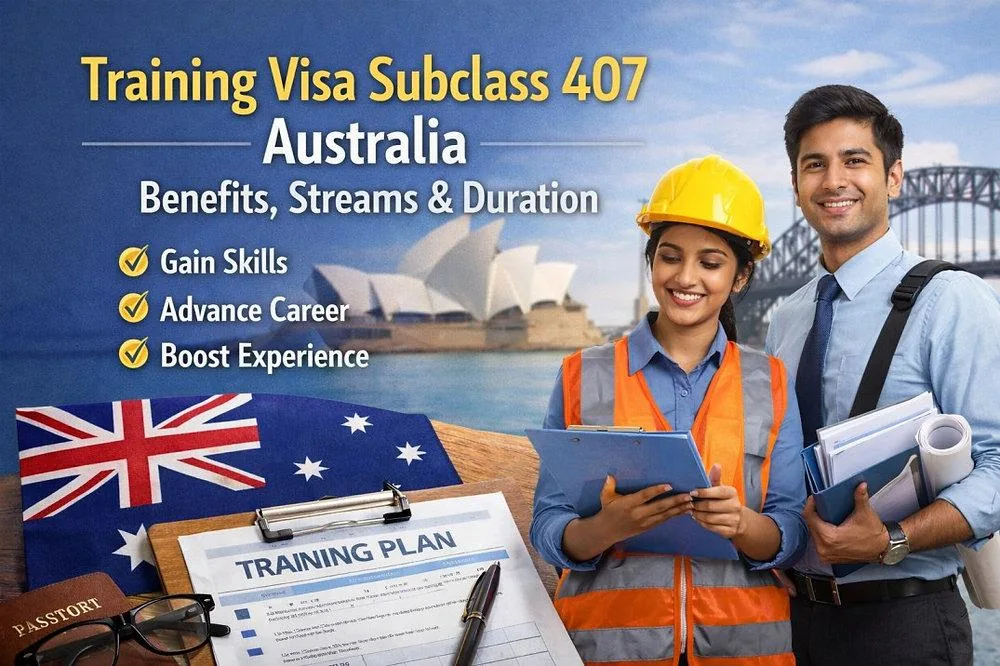
Overview of the purpose and main features of the Australian Training Visa.
What’s New? 407 Visa Rules Effective 12 November 2026
The most significant change concerns where an applicant must be located when applying for and receiving the Subclass 407 visa.
Important Change From 12 November 2026
Most applicants must be outside Australia when they lodge their Subclass 407 visa application and when the Department of Home Affairs grants the visa. Specific exemptions may apply to certain classes of applicants.
Under the new rules:
- Applications made in Australia: An application lodged while the applicant is in Australia will generally be invalid unless the applicant falls within a specified exemption.
- Location at visa grant: The applicant must generally be outside Australia when the Department makes the visa grant decision.
- Online submission does not override the rule: Being able to submit an application through ImmiAccount does not mean the application satisfies the legal location requirement.
- No bridging visa linked to an offshore application: An application lodged while outside Australia does not provide a Bridging Visa to remain in Australia while the Subclass 407 application is being processed.
The Department has also clarified that valid Subclass 407 applications lodged before 12 November 2026 will continue to be assessed under the rules that applied when those applications were made.
The New 407 Visa Location Rule
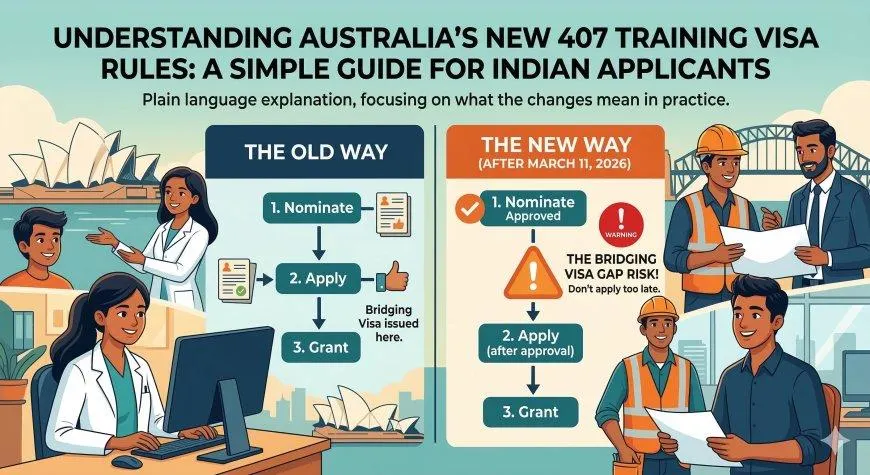
Applicants should check whether a specific exemption applies to their circumstances.
What If You Are Currently in Australia?
If you are in Australia on or after 12 November 2026 and intend to apply for a Subclass 407 visa, you will generally need to leave Australia before lodging your application, unless you fall within an applicable exemption.
Leaving Australia should not be treated as a guarantee that your visa will be granted. You must still meet the sponsorship, nomination and visa requirements.
What Should You Check Before Travelling?
Before making travel arrangements, consider the following:
- Current visa expiry: Check when your existing visa expires and ensure you remain lawful until departure.
- Sponsor approval: Confirm that the organisation has been approved as a Temporary Activities Sponsor.
- Nomination approval: Check that the proposed training nomination has been approved, where required.
- Supporting documents: Prepare the necessary evidence before travelling.
- Time outside Australia: Plan for the possibility that you may need to remain overseas until a decision is made.
- Travel arrangements: If you need to return to Australia while the application is being processed, you must hold another valid visa and comply with its conditions.
If you leave Australia after lodging an offshore application, you will not receive a Bridging Visa linked to that application. You should therefore plan your immigration status and travel arrangements carefully.
Who Is Eligible for the 407 Visa?
The Subclass 407 visa is intended for individuals whose proposed training fits within one of the recognised occupational training categories.
1. Occupational Training Required for Registration
This category covers training required to obtain registration, membership or a licence to work in a particular occupation in Australia or overseas, where the relevant requirements are met.
2. Occupational Training to Improve Skills
This category is for individuals who need structured workplace-based training to improve their skills in an eligible occupation. The programme should be relevant to their existing qualifications, experience and occupational background.
3. Occupational Training for Capacity Building Overseas
This category covers eligible training connected with overseas qualifications, government-supported training or professional development activities.
Applicants must also satisfy the applicable visa criteria, which may include age, English language, financial capacity, health insurance, health and character requirements. Applicants are generally required to be at least 18 years old when the visa decision is made, although exceptions may apply.
Subclass 407 Visa Requirements
Being offered a training opportunity by an Australian organisation does not automatically make someone eligible for the Subclass 407 visa. Applicants must meet the relevant sponsorship, nomination and visa requirements and provide supporting evidence.
Key requirements generally include:
| Requirement | What It Means |
|---|---|
| Approved sponsor | An eligible organisation must be approved as a Temporary Activities Sponsor, unless an applicable exception applies. |
| Approved nomination | The proposed occupational training must be nominated and approved before the visa application, unless the sponsor is a Commonwealth Government agency. |
| Genuine training programme | The programme must meet an eligible occupational training or professional development purpose. |
| Relevant background | The applicant must have the qualifications, work experience or study background relevant to the proposed training. |
| English language | Applicants must meet the applicable English requirement unless an exemption applies. |
| Financial capacity | Applicants must demonstrate they can support themselves during their stay. |
| Health insurance | Applicants must have adequate health insurance arrangements as required. |
| Health and character | Applicants must satisfy the relevant health and character criteria. |
The Department assesses each application individually. Meeting the basic requirements does not guarantee that a Subclass 407 visa will be granted.
407 Visa Sponsorship and Nomination Requirements
Before an organisation can sponsor an applicant for the Subclass 407 visa, it generally needs to be approved as a Temporary Activities Sponsor.
The sponsor must also nominate the proposed occupational training programme. The nomination provides information about the applicant, the purpose of the training, the activities involved and where the training will take place.
The nomination must generally be approved before the applicant submits their visa application. A Commonwealth Government agency is exempt from the requirement to make a separate nomination.
How the 407 Visa Process Works
- Identify the training opportunity: The applicant and organisation establish a genuine eligible training programme.
- Obtain sponsor approval: The organisation obtains approval as a Temporary Activities Sponsor, where required.
- Submit the nomination: The sponsor nominates the proposed training programme.
- Obtain nomination approval: The nomination must be approved before the visa application, unless an exception applies.
- Prepare the visa application: The applicant gathers the required personal, training and supporting documents.
- Apply from the required location: From 12 November 2026, most applicants must be outside Australia when applying and when the visa is granted.
Applicants should confirm that the relevant sponsorship and nomination stages are complete before making travel arrangements or lodging their visa application.
What Is a 407 Visa Training Plan?
A training plan is an important part of the proposed Subclass 407 programme. It explains what training the applicant will receive, how the activities will be delivered and how the programme relates to their existing qualifications, experience or occupational development needs.
A suitable training plan should clearly identify:
- The applicant’s current qualifications, skills and work experience.
- The specific skills or competencies they need to develop.
- The training activities and practical workplace exposure involved.
- The supervision, instruction and guidance they will receive.
- The expected learning outcomes and training duration.
The proposed programme should be genuine, structured and relevant to the applicant’s development. It should not simply describe an ordinary job or use the visa as a way for an organisation to fill a position or address a general labour shortage.
What Should a 407 Training Plan Include?
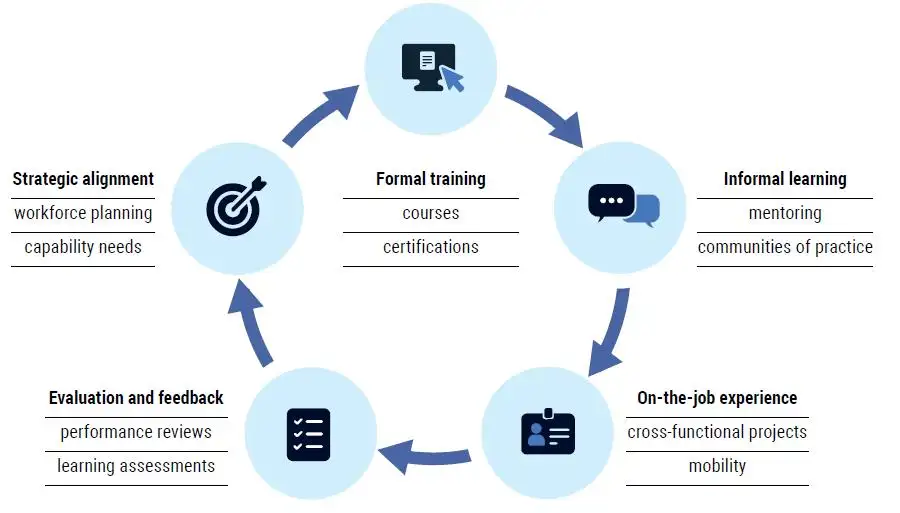
A training plan should demonstrate a genuine and structured occupational training programme.
407 Visa Fees and Processing Time
The visa application charge and other associated expenses should be considered before proceeding with a Subclass 407 application.
Subclass 407 Visa Cost
The visa application charge stated in the supplied fee information is:
AUD 535
Check the Department of Home Affairs Visa Pricing Estimator for the applicable charge on the date you apply. Concessions may be available for eligible applicants from certain Pacific Island countries and Timor-Leste.
Other possible expenses include:
- Health examinations.
- Police certificates.
- Document translation costs.
- Health insurance.
- Professional assistance, if required.
407 Visa Processing Time
Processing times vary depending on the application, the completeness of supporting documents and whether the Department needs additional information or verification.
Applicants should use the official Visa Processing Time Guide for an indication of recent processing times. The guide is an estimate and does not guarantee when an individual application will be decided.
Can You Move from a 407 Visa to Permanent Residency?
The Subclass 407 visa is a temporary training visa and does not automatically lead to permanent residency.
However, depending on your occupation, qualifications, skills assessment, work experience, English language ability and other circumstances, you may be able to explore other skilled or employer-sponsored visa pathways in the future.
Possible options to investigate may include:
- Skilled migration visas: Certain points-tested pathways may be worth exploring if you meet the relevant occupation, skills assessment and points requirements.
- Employer-sponsored visas: You may be able to investigate an eligible employer-sponsored pathway if you have an appropriate occupation and an employer willing and able to sponsor you.
Each visa has its own eligibility criteria, sponsorship requirements and application process. Holding a Subclass 407 visa does not automatically make you eligible for another visa or guarantee permanent residency.
How APG Can Help With Your 407 Visa Plans
The changes to the Subclass 407 visa rules make it particularly important to understand your circumstances before travelling, arranging sponsorship or preparing a visa application.
Asia Pacific Group (APG) can help you understand the relevant visa requirements, review your circumstances and discuss possible migration options. Our team can provide guidance on sponsorship and nomination requirements, supporting documents and potential future visa pathways.
If you are based in Melbourne, speaking with a Registered Migration Agent in Melbourne can help you understand which requirements may apply to your situation before you make your next move.
Planning to Apply for a 407 Visa?
Before you make travel or application decisions, consider having your circumstances reviewed, including:
- Your current visa status and expiry date.
- The proposed training programme and your eligibility.
- Sponsor approval and nomination requirements.
- The new offshore application and visa grant requirements.
Need Guidance With Your 407 Visa Options?
Discuss your circumstances and understand the requirements that may apply to your training visa plans.


